
Based on the Combined Decompression Model (CDM-18), this spreadsheet analyzes any dive profile and breathing gas combination for correct decompression methodology. It clearly identifies any part of the dive profile or breathing gas change that will likely cause DCS.
The CDM-18 analyzer works simply by using an 18 tissue Neo Haldanean model that contains the most conservative m-values and half times ever discovered by formal research into the decompression tolerance of the human body using ‘man based’ test methods. Additionally, other published tables, computer generated printouts, and anecdotal evidence of better feeling decompression such as by the carrying out deep stops, Pyle stops or a 10m/min limiting ascent rate were also taken into account in the CDM-18 model where this additional data resulted in lower decompression stress.
The CDM-18 Model was originally developed to ascertain if the mixed gas decompression regime followed by a diver was responsible for causing the severe DCS injuries he suffered, or if there were other causes. The CDM-18 model therefore makes the first attempt at predicting ‘legally defendable decompression’
Also included within the algorithm for the first time, are entirely new ultra fast tissue compartments, and rules based programming so as to accurately predict and to determine the preventative measures necessary so as to avoid other debilitating phenomena such as:-
- Isobaric counter diffusion & ‘Narcotic shock’
- DCS hits within currently understood NDL limits
- Ascent rate limits not predicted by current decompression models
Testing of the algorithm
The algorithm has currently been man tested on 300 Trimix dives in the 50-300 meter level, and is in day to day use by a select group of extreme Trimix divers world wide.
On many of the test dives, divers within the same team carrying out decompression according to commercial dive planning software or current technical diver training agency recommendations, suffered severe DCS hits predicted by the CDM-18 model. Latest tests include safely predicting the dive profile for the world record dive to 313 meters completed by British Explorer Mark Ellyatt, and the current worlds deepest wreck dive to 193meters completed by South African wreck explorer Rob Lalumiere.
Even more astonishing is that the algorithm coped with Mark Ellyatt’s severe residual DCS Type I, II & III injuries sustained from diving experimental ‘bubble-phase’ profiles to shallower depths within the previous year. Testing has included multi-day decompression diving during 2 week dive series, and other world record dives in the 200meter-300meter depth range. A key feature of the CDM-18 model is in the prediction of the correct gas switching methodology so as to prevent Isobaric Counter Diffusion/type III DCS
Key features
- The CDM-18 algorithm accurate predicts DCS hits that resulted from many faulty dive profiles ranging from shallow air dives to the deepest mixed gas Trimix dives.
- The CDM-18 algorithm accurately predicts the need for a 10m/min ascent rate.
- The CDM-18 Algorithm predicts DCS hits for divers making excessively fast ascents within the current NDL limits of all current recreational dive tables. These predictions directly affect recreational divers.
- The CDM-18 algorithm accurately predicts the onset of Isobaric counter-diffusion (ICD) or narcotic shock that has been responsible for killing many Trimix divers involving dives deeper than 80 meters/260ft range. It predicts the point in the dive where the ICD hit will occur, and what changes need to be made to the gas switch to avoid the problem.
Obtaining a copy of the CDM-18 Dive Profile Analyzer
4 versions of this dive profile analyzer plus a free demo version are available. The analyzer has no limits programmed into it. Dives to any depth may be analyzed. 700meters/2,300ft represents the greatest depth a human beings lungs have been proven to cope with the workload of high density breathing gases in a saturation diving environment.
All purchased versions are password protected. The password and program are normally emailed to you within 24hours of me receiving payment confirmation.
I shouldn’t need to mention here that anyone carrying out Trimix Decompression dives must have received thorough training in how to carry out these sort of dives or you will likely die.
Ordering guide: 20 Point ‘Demo’
- Try out analyzing the first 20 points of any Air/Nitrox/Trimix dive.
- 40 Point ‘Standard Version’ – Chose either… Open Circuit O/C or Closed Circuit Rebreather CCR
- Intended User – Tech diver students analyzing Air/Nitrox/Trimix dives to 100meters
- 100 Point ‘Explorer Version’ Chose either… Open Circuit O/C or Closed Circuit Rebreather CCR
- Intended User – Experienced Tech divers planning extreme exposure Air/Nitrox/Trimix dives deeper than 100 meters
- User specified ‘Commercial Versions’
For either… Open Circuit O/C or Closed Circuit CCR or Saturation diving
User Specified number of analysis points suitable for multi-week saturation diving profile analysis or extremely long duration technical dives. Priced per 100 analysis points*All versions offer unlimited depth analysis Trimix/Nitrox/Air dive profiles.
| Ordering note:- All versions require MS-Excel to be installed on the users machine. Download Free 20point CDM-18 demo version – 130Kb Dive_profile_analyser_instructions_v1.01.pdf – 270Kb |
Screen shots
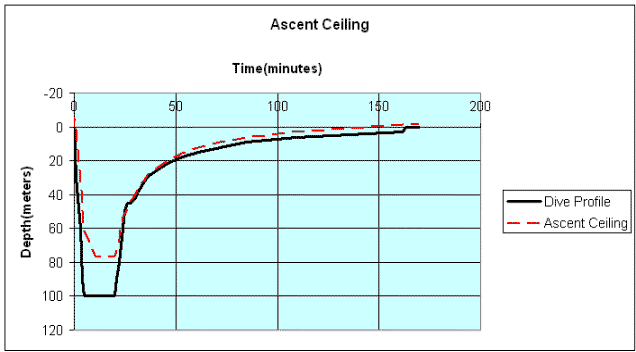
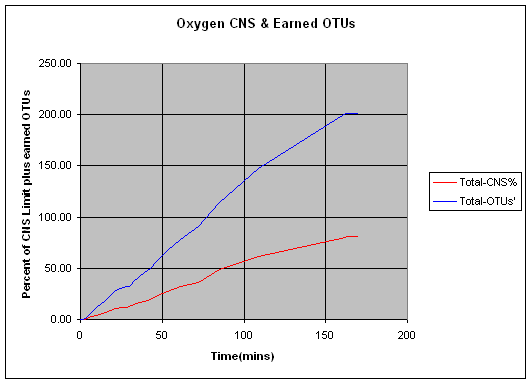
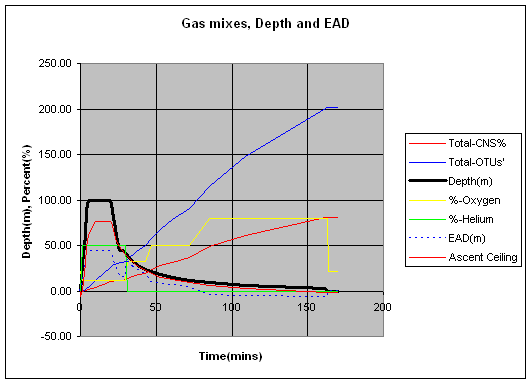
Unlimited Depth. Unique Isobaric Counter-diffusion DCS predictor Tool. As used on Mark Ellyatt’s recent world record breaking 313m Dive, .
NOTES & CONDITIONS OF USE
- THE VERY NATURE OF DETERMINING SAFE DECOMPRESSION IS A STATISTICAL TRADE OFF BETWEEN ‘ACCEPTABLE RISK OF BENDS AND TAKING AN INFINITE TIME TO ASCEND TO THE SURFACE. A REASONABLE RISK FOR RECREATIONAL DIVERS IS ACCEPTED TO BE 1 DCS HIT REQUIRING A RECOMPRESSION TREATMENT EVERY 2,500 DIVES. FOR US NAVY DIVERS CARRYING OUT EXTREME EXPOSURE AIR DIVES IN THE 200-300FT DEPTH RANGE WITH A RECOMPRESSION CHAMBER ON SITE, THE RISK OF DCS HAS BEEN DETERMINED TO BE APPROX 1 IN 50 DIVES.
- DUE TO THE STATISTICAL NATURE OF DECOMPRESSION PLANNING, NO DIVE PLANNER OR DIVE PROFILE ANALYZER CAN GUARANTEE TO PREDICT A 100% SAFE DIVE PROFILE THAT IS ENTIRELY FREE FROM DCS RISK FOR ALL INDIVIDUALS UNDER ALL CONDITIONS
- IT IS A CONDITION OF ORDERING ANY VERSION OF THE CDM18 DIVE PROFILE ANALYZER THAT YOU ACKNOWLEDGE:-
(1)THE STATISTICAL NATURE OF DCS,
(2)THAT NO DIVE PLANER CAN GUARANTEE YOUR PLANNED DIVE TO BE RISK FREE AND
(3) YOU WILL USE THE INFORMATION DISPLAYED ENTIRELY AT YOUR OWN RISK.